

You’ve got a house that needs work. The roof leaks when it rains hard, the kitchen cabinets sag, and that foundation crack keeps growing. Perhaps you inherited it from a relative, or maybe life circumstances changed, and now you can’t tackle the repairs anymore. If you’re also selling tenant-occupied property, the process can feel even more complicated, especially when balancing repair decisions with your responsibilities as a landlord. Here in Texas, you’re not alone. I’ve helped hundreds of homeowners navigate this exact situation across Houston, Dallas, Austin, and San Antonio.
Homeowners across Texas rely on The Sell My House Fast Houston Team when they need a fast, reliable way to sell their house without repairs or delays.
The good news? You’ve got options. Whether you decide to fix up your property or sell it as-is, there’s a path forward that makes financial sense. I’ll walk you through everything you need to know about selling a fixer-upper in Texas, from understanding disclosure requirements to maximizing your return.
As part of understanding your options, it helps to see how our process works so you know exactly how a cash home sale can simplify things if you choose to sell as-is.
Pre-sale Property Assessment and Repair Cost Analysis

Before you make any decisions, you need to know exactly what you’re dealing with. Start with a comprehensive assessment of your property’s condition. For homeowners who decide the repairs don’t make financial sense, working with a cash for houses company in Houston can be a practical alternative when selling a property as-is becomes the better option. This isn’t about getting fancy; it’s about being honest with yourself about what needs fixing and what it’ll cost.
Walk through your house room by room. Document everything. That loose handrail, the water stains on the ceiling, and the HVAC system that sounds like a freight train. Take photos. Write it all down. You’re building a complete picture of your property’s current state.
For key systems, such as electrical, plumbing, roof, and foundation, consider having a professional inspect them. Yes, it costs money up front, but these examinations provide you with realistic repair estimates. A foundation professional might quote you $8,000 for pier and beam repairs; a roofer could give you a $12,000 estimate for a full replacement. These numbers count for your decision-making.
Here’s where most homeowners get stuck: they either underestimate costs or feel overwhelmed by the total. Don’t fall into either trap. Break down repairs into categories: safety issues (electrical problems, structural damage), functional problems (broken HVAC, plumbing leaks), and cosmetic updates (paint, flooring, landscaping).
Safety issues must be addressed regardless of your selling strategy. Functional problems significantly impact your home’s value and marketability. Cosmetic updates offer the lowest return on investment but can help your property sell faster.
Calculate your potential return on investment for each repair category. If you’re looking at $30,000 in total repairs, but they only add $20,000 to your sale price, the math doesn’t work. That’s when selling as-is becomes the smarter option.
Consider your local market conditions too. Texas homes currently have a statewide median price of $330,950, with the market showing steady activity and median prices at $335,000. Days on market have fallen to 61 days statewide, indicating decent demand even for properties that need work.
Understanding Texas Real Estate Disclosure Requirements for Fixer-uppers
Texas disclosure laws are strict, and selling “as-is” doesn’t get you off the hook. Selling a residential property “as is” is not a permissible dodge of this legal responsibility. All participants in a residential real estate transaction should be on the same page regarding the requirement for full and ongoing seller disclosure of known material facts.
You must complete a Seller’s Disclosure Notice for any residential property sale in Texas. This form covers everything from the condition of appliances and HVAC systems to past repairs and known defects. It only needs to be filled out “to the best of the seller’s belief and knowledge” as of the signing date. This means that you are not required to conduct any independent inspections of your property.
But here’s what you truly must disclose if you know about it: structural problems, foundation issues, roof repairs, electrical or plumbing defects, past flooding or water damage, termite problems, and any environmental hazards like asbestos or lead paint. If you’re trying to sell a house with termites in Texas, disclosure is non-negotiable. Buyers are entitled to know about any active infestation or past treatment, even if the damage has already been repaired. You must disclose past fires in the house if you know they’ve occurred, regardless of whether the fire was caused by anything mechanical in the home or if the damage has since been repaired.
Water damage disclosure is particularly important in Texas. Water-related issues are a key focus in Texas disclosures. Sellers must disclose any history of flooding, drainage problems, or water intrusion. This includes events such as past flood damage, recurring leaks, or standing water after heavy rain. Given our climate and frequent severe weather, buyers are especially sensitive to water issues.
Even if you know about the issue and have repaired it, you generally still have to disclose it. That foundation crack you had fixed three years ago? Disclose it. The roof leak you patched last summer? Disclose it. The key is “known material facts“—anything that could reasonably influence a buyer’s decision.
Don’t try to hide problems by making cosmetic repairs without addressing underlying issues. In Texas, the Seller’s Disclosure survives closing, which means that if you fail to disclose something you knew of, the buyer could hold you responsible for it even after they close on the home.
If you’re uncertain about whether something needs disclosure, be as transparent as possible. It is always much better to over-disclose than to try to hold something back. If you try, it will come back to bite you in the end.
Texas Home Inspection Issues and Seller Responsibilities

Home inspections can make or break fixer-upper sales. Understanding your responsibilities and rights during the inspection process helps you navigate this critical phase successfully.
In Texas, buyers typically have 7 to 10 days for inspections, depending on the terms of the contract. During this period, professional inspectors will examine your property’s major systems and identify defects. Expect them to find issues—that’s their job.
Your responsibility is to provide reasonable access to all areas of the property. This includes attics, crawl spaces, electrical panels, and any outbuildings. Don’t try to limit access or hide problem areas. Inspectors are trained to identify issues, and restricted access raises red flags.
The inspector can only inspect what they have access to at the time of the home inspection. If you have a window that leaks water into the home every time it rains, the inspector won’t be able to see that if he inspects the home on a sunny day. This is why your disclosure form is so important—it fills in gaps the inspection might miss.
When inspection reports come back, you’ll face requests for repairs or price reductions. Don’t panic. This is normal, especially with fixer-uppers. Buyers expect issues, but they want to understand the scope and cost.
Do the related safety repairs first. Electrical failures, gas leaks, or structural flaws need to be repaired or rectified. Functional problems such as plumbing difficulties or HVAC repairs are generally negotiable. Cosmetic elements like paint or small fixtures are often the buyer’s responsibility.
Be smart about which repairs you’ll do & which ones you’ll credit. Simple and affordable solutions, such as upgrading GFCI outlets or caulking around tubs, indicate real faith. Consider granting price credits for major repairs, such as a roof replacement or foundation work, so buyers can select their own contractors.
Document any repairs you complete with receipts and photos. This protects you from future claims and demonstrates the quality of work performed.
Don’t be scared to negotiate if buyers are requesting major repairs that go beyond your budget. You may agree to deal with safety issues with credit for other goods. Buyers are buying your property knowing it requires work. They are not looking for a perfect property.
No-gos are some inspection problems. Buyers will back away from foundation faults requiring considerable repair, major electrical dangers, or environmental contamination. If this happens again, you may want to think about changing your pricing or selling to a cash buyer who buys as is.
Texas Property Tax Implications for Damaged Home Sales
Property taxes add complexity to fixer-upper sales, especially when damage affects your home’s assessed value. Understanding these implications helps you plan financially and avoid surprises.
Selling a house in Texas means the seller pays their share of property taxes through a closing credit. The title company calculates the number of days the seller owned the property during the current tax year. This proration is standard regardless of your property’s condition.
However, damaged properties may qualify for reduced assessments. If your property was damaged, ask your county tax appraiser to reappraise it and determine its current (post-disaster) taxable value. Do this before you make any repairs or rebuilds. Your taxes can be prorated to reflect the lower reappraised value.
If natural disasters damaged your home, you might qualify for temporary exemptions. The damage assessment rating determines the percentage of the appraised value of the qualified property that is exempted. The amount of the exemption is determined by multiplying the property value by a fraction that applies the damage assessment rating.
Fire damage may qualify for specific exemptions. Tax Code Section 11.351 allows an exemption for a residence homestead improvement, but this exemption only applies to the tax year in which the fire occurred.
If your home has serious damage, don’t assume your property taxes are correct. Property appraisers may not know about current damage or degradation. If your property value has dropped dramatically, you may request a reassessment by reaching out to your local appraisal district.
If a disaster damaged your home, you still need to pay your property taxes on time. There is no automatic protection from tax foreclosure, no extension of payment terms, or any other forgiveness provisions. However, you may qualify for installment payment plans in certain circumstances.
Selling requires ensuring your closing statement accurately reflects current tax obligations. Standard TREC contracts include a reproration clause. This clause requires both parties to settle up upon receipt of the actual tax bill. Without it, you could overpay or underpay with no way to fix it.
Homestead exemptions continue even if your home is damaged, provided you maintain the property as your principal residence. Tax Code Section 11.135 provides that a property owner may continue to receive the homestead exemption on the structure, land, and improvements when the residential structure is rendered uninhabitable or unusable by a casualty.
If you’re selling because damage makes the property uninhabitable, timing matters for tax purposes. The owner will incur additional taxes and interest if the property is sold before the replacement qualified structure is completed.
Pricing Damaged Properties Competitively in Texas Real Estate
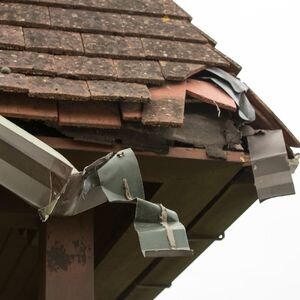
Pricing a fixer-upper correctly is both art and science. The price is too high, and your property sits on the market while carrying costs accumulate. The price is too low; you’re leaving money on the table.
Start with a comparative market analysis (CMA) focused on comparable properties in similar conditions. Don’t compare your fixer-upper to move-in-ready homes. Look for recent sales of properties that needed significant work. Your real estate agent should provide comps that show both list and sale prices for distressed properties.
The statewide median price was $330,950, up 1.6% from 2023, although that was for all property kinds and circumstances. The rule of thumb is that fixers sell for 15-30% below the market value of a similar move-in-ready property, depending on the needed repairs.
Discover the worth of your property post-repairs. This is what your home would be worth in excellent condition. Lower expected repair expenses, holding costs, and appropriate profit for the buyer. This will provide you with a benchmark for pricing.
For example, if your home’s ARV is $300,000 and it needs $40,000 in repairs, you might price it at $230,000-$240,000. This allows buyers room for repairs while giving you a competitive sale price.
Consider your local market dynamics. Texas’ number of active listings increased from 122,192 to 124,663 (2 percent). Dallas grew the most, 3 percent, from $393,340 to $404,995. Higher inventory means more competition and potentially lower prices.
Factor in the days-on-market for your area. Homes also spent more time on the market, with Days on Market rising from 55 days a year ago to 60 days in April. Days on Market (DOM) for single-family homes rose from 55 to 60 days. If properties are taking longer to sell, you may need to price more aggressively.
Don’t forget to account for your carrying costs while the property is on the market. Property taxes, insurance, utilities, and maintenance add up quickly. If your monthly carrying costs are $2,000 and you expect a 60-day marketing period, factor in an additional $4,000 in costs.
Price reductions are common in fixer-upper sales. Plan for this possibility by starting at a price that allows room for negotiation. Many successful sellers start 5-10% above their minimum acceptable price, giving them flexibility during negotiations.
Consider offering buyer incentives instead of lowering your price. Covering closing costs, providing repair credits, or including a home warranty can be more appealing than straight price reductions.
Monitor your competition regularly. If similar properties are sitting on the market or selling for less than expected, adjust your strategy accordingly. Markets change quickly, and flexibility is key to successful sales.
Marketing Strategies for As-is Home Sales in Texas Markets
Marketing a fixer-upper requires a different approach than selling a pristine home. Your goal is to attract buyers who see potential rather than problems. Many sellers also compare different regional approaches, such as how we buy Austin homes versus other Texas markets, especially when deciding whether to sell locally or explore investor offers.
Go after the proper buyer segments: investors looking for rental or flip opportunities, handy homeowners who like DIY, first-time purchasers looking for economical entry points, and contractors or builders who are looking for projects. Different groups have different interests and concerns.
Write appealing listing descriptions that acknowledge the state of the property while promoting its potential. “Investor opportunity” or “handyman special” instead of “needs work.” Be sure to point out the favorable qualities (lot size, location, architectural details) that will not be damaged by the necessary repairs.
Photography is crucial but challenging for fixer-uppers. Show the property honestly while highlighting its best features. Take photos during optimal lighting conditions and include both wide shots showing room layouts and detail shots of high-quality features, such as hardwood floors or original trim work.
Consider virtual tours or video walkthroughs. These allow buyers to see the property’s condition and layout before scheduling showings, saving time for both parties and attracting serious buyers.
Price your property competitively from the start. Overpriced fixer-uppers sit on the market and become stigmatized. Only 30.3% of homes had price drops, up from 29.0% in March last year. The sale-to-list price was 97.1%, down 0.42 points year over year. Price reductions signal problems to buyers.
Provide detailed repair estimates upfront. Serious buyers want to understand potential costs before making offers. Having professional estimates available shows transparency and helps buyers make informed decisions.
Market to cash buyers and investors. These buyers often purchase as-is without financing contingencies, leading to faster, more certain closings. Companies like Sell My House Fast Houston, TX, specialize in purchasing fixer-uppers quickly for cash.
Use multiple marketing channels. List on the MLS through a real estate agent, post on investor-focused websites, advertise in local real estate investor groups, and consider direct mail to known investors in your area.
Host investor-focused showings/open houses. Arrange for periods when investors and contractors can come and examine the property together. This builds the urgency and helps buyers to network with potential partners.
Be flexible with showing times. Serious investors and contractors often work during regular business hours and prefer evening or weekend showings.
Highlight location benefits that transcend the property’s current condition. Good school districts, convenient commutes, or desirable neighborhoods remain valuable regardless of needed repairs.
Staging Damaged Homes to Maximize Sale Price in Texas
Staging a fixer-upper seems counterintuitive, but strategic presentation can significantly impact buyer perception and sale price. The goal isn’t to hide problems but to help buyers envision the property’s potential.
Start with a thorough cleaning. Even damaged homes should be spotless. Clean windows let in more light, swept floors show room layouts clearly, and tidy spaces feel more manageable to buyers. Remove all personal belongings and clutter that distract from the property’s bones.
Address safety hazards immediately. Loose handrails, exposed electrical wires, or unstable steps create liability issues and scare away buyers. These fixes are often inexpensive but can make a huge difference in buyer comfort levels.
Maximize natural light throughout the property. Open all curtains and blinds, replace burned-out bulbs with bright LED lights, and clean light fixtures. Well-lit spaces feel larger and more inviting, even when they need work.
Make simple cosmetic improvements with high impact. Fresh paint in neutral colors costs little but makes spaces feel cleaner and more up-to-date. Focus on high-traffic areas, such as entryways and main living spaces.
Clear out overgrown landscaping that blocks views or makes the property feel abandoned. Trim bushes away from windows, remove dead plants, and ensure walkways are clear and safe. Good curb appeal brings buyers through the front door.
Stage key rooms to a minimum to help buyers visualize the space’s potential. A few pieces of furniture in the living room or a small table and chairs in the kitchen help define spaces without major expense.
Create clear pathways through the home. Remove furniture or debris that blocks the natural flow of traffic. Buyers should be able to walk through easily and see each room’s layout clearly.
Organize and present documentation professionally. Create a folder with repair estimates, disclosure forms, and any relevant property information. A professional presentation suggests responsible ownership and builds buyer confidence.
Address obvious odors that can turn buyers off immediately. Pet odors, smoke smells, or musty basement scents are major deterrents. Use professional cleaning services if necessary, as these issues are often deal-breakers.
Highlight original architectural features that add character and value. Clean and showcase elements like hardwood floors, original trim work, or unique built-ins. These features often survive renovation and add to the property’s appeal.
Consider minor repairs that provide disproportionate impact. Fixing a leaky faucet, replacing broken cabinet handles, or patching small holes in walls costs little but shows the property has been maintained.
Don’t try to hide major issues, but present them in context. If the roof needs replacement, provide written estimates and explain that the price reflects this known issue. Transparency builds trust and prevents surprises during negotiations.
Frequently Asked Questions
Is It Hard to Sell a Home That Needs Repairs?
Selling a home that needs repairs is definitely more challenging than selling a move-in-ready property, but it’s absolutely doable with the right strategy. You’ll likely face a smaller buyer pool and longer marketing times, but many buyers specifically look for fixer-uppers as investment opportunities or affordable entry points. The key is pricing correctly and being transparent about the property’s condition from the start.
What Not to Fix When Selling a House in Texas?
Don’t waste money on high-end cosmetic upgrades like luxury fixtures, expensive flooring, or premium appliances when selling a fixer-upper. Skip personal preference items, such as bold paint colors or landscaping, that won’t appeal to all buyers. Also, avoid major structural repairs that cost more than they add to your sale price—these are often better handled through price reductions that let buyers choose their own contractors.
What Is the 3 3 3 Rule in Real Estate?
The 3 3 3 rule suggests that in the first 3 days, your property gets 30% of its total showings; in the first 3 weeks, it gets 60% of total showings; and after 3 months on the market, buyer interest drops significantly. For fixer-uppers, this means pricing aggressively from the start is crucial since you have a narrower window to capture serious buyer attention before your property becomes stale.
Helpful Texas Blog Articles